




Want to get rid of snails? Here’s how to do it without using pesticides.
The most effective way to control snails is to tackle them in the soil before they devour your plants. With nematodes, you use nature's help, safe for your garden, your pets, and yourself.


What to do about snails
If you're looking for what to do about snails, start by making your garden less attractive. Clear away hiding places, remove loose planks, thin out dense borders, and remove wet organic material that lies around for days. Preferably water in the morning, so that the surface is drier towards the evening. Then, for three evenings, take a short walk with a flashlight and note where you see them most. Controlling slugs will immediately become much more efficient in these hotspots.
If you want to link this step-by-step plan directly to a concrete solution, then the practical approach against snails fits logically here.

Controlling slugs
Controlling slugs is most effective when you interrupt their route to vulnerable plants. Temporarily place young plants in pots or raised beds, making the crossing less straightforward. Keep edges around beds airy and avoid thick, wet mulch layers right next to seedlings. Check in the evening or early morning during damp weather and repeat this for a few consecutive days. This way, slug control becomes a routine, and the problem feels less like endless firefighting.
Controlling slugs
Controlling slugs works best in a short campaign of two to four weeks. Start with trapping at fixed times and combine that with reducing hiding places, so you not only catch the visible slugs but also the new recruits. For slug control, soil moisture and soil temperature are crucial, as many organic applications require moist soil and sufficient warmth to remain active. Don't expect miracles if your soil is bone dry or remains cold for an extended period.
If you're looking for a biological step that fits this, nematodes against slugs and snails align well with this phase.
Where do slugs come from?
Where slugs come from is usually a combination of moisture and shelter. Compost edges, shady corners, heavy wet soil, and dense greenery along the property line are typical starting points. Also look at stacks of pots, stone edges, and places where leaves accumulate. By tackling these sources, you reduce the inflow, and slug control becomes much more predictable.

Nematodes against Snails
 Order now, get it tomorrow

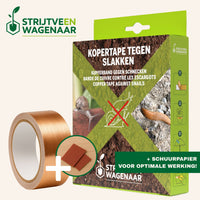
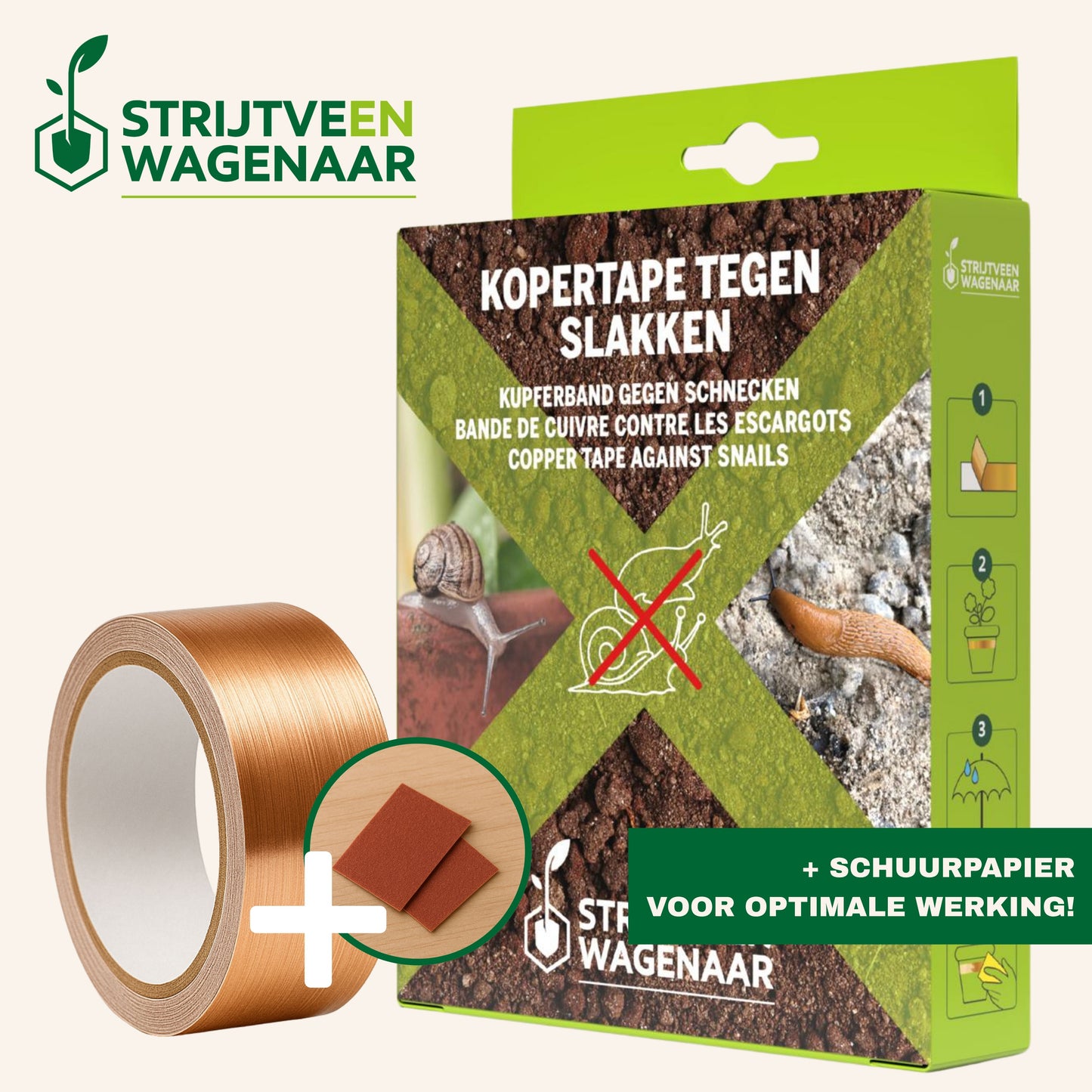
Slakkentape
Order now, get it tomorrow
When are slugs active
Slugs are most active in the evening, night, and early morning, especially in mild and wet weather. For slug control, this means you should schedule your checks around these times, otherwise, you'll mainly miss the active animals and overestimate your results. Pay extra close attention after rain or when humidity is high, as this is when you'll more easily see where their routes are. If you then choose measures, slug control becomes less about guessing and more about guiding.
Slug eggs
Slug eggs are small, gelatinous spheres often found in clusters just below the surface layer. You'll find them under pots, stones, planks, and in moist edges of mulch or compost. If damage keeps recurring, it's often because slug eggs go unnoticed and then hatch all at once later. Anyone who wants to control slugs with less repetition should make searching for slug eggs a regular habit.


Controlling snail eggs
Combating snail eggs is mostly practical work. Scoop the clusters out of the ground with a spoon or trowel and dispose of them in a sealed container. Repeat this during wet periods, as you rarely find everything in one go. Combine this with opening fixed hiding places so that the top layer can dry out more often. By systematically including snail egg control, slug control for the rest of the season often becomes noticeably easier.
Snail control with vinegar
Snail control with vinegar sounds quick, but it's not a standard solution. Vinegar can damage plants and locally affect the soil, potentially causing you more work later. If you are considering controlling snails with vinegar, only use it on hard surfaces and far away from root zones and drainage. See it as clearing individual snails, not as population control.
If you're thinking about controlling snails with salt, remember that salt can cause damage even faster and can remain in the soil, so the risk is often greater than the reward.
Copper wire against snails
Copper wire against snails is primarily a barrier measure for pots and raised beds. It only works if the copper line is closed, stays clean, and has no bridges via leaves, soil, or adjacent materials. So, use copper wire against snails as protection for one vulnerable zone, not as the sole strategy for the entire garden. In combination with control, it can make snail control around young plants much more feasible.
Slugs indoors
You often see slugs indoors after wet weather or prolonged moisture in crawl spaces, garages, or basements. A slug indoors almost always indicates a route through cracks, grates, or a frequently open door. Follow slime trails along baseboards and thresholds and check damp spots behind pots or storage. If you consistently intervene outdoors, the pressure indoors will also decrease more quickly.
Identifying slugs


Combatting slugs in your home
Combating slugs in the house starts with blocking access and reducing moisture. Seal cracks, use draft excluders, and address condensation or leaks. Move wet storage and make routes drier so slugs have less reason to come inside. The same applies to combating slugs indoors: trapping them is only truly effective if you simultaneously block their entry points. This turns slug control in the house into a short phase rather than a recurring problem.
Slug Control: Selection Aid
What helps against slugs depends on location and pressure. In the garden with high pressure, you combine environmental adaptation, consistent control, and one targeted measure suitable for moisture and temperature. In pots and containers, barriers and control often work better than broad treatment. Indoors, slug control primarily revolves around access and moisture management. Choose one approach that you can maintain rather than several that you don't finish, because perseverance determines whether slug control truly has an effect.
If you want to choose based on your situation, the selection aid for slug control is the logical next step.
Frequently Asked Questions about Snails
Especially slugs are the main culprits in the garden. They feed on leaves, stems and roots of plants. The common garden snail with a shell causes less damage but can also be annoying.
Snails are most active in damp and cool weather, especially in spring and autumn. They emerge in large numbers after rain or at night. In dry and warm weather, they retreat into the soil.
Snails live in the soil and emerge when conditions are favorable. They lay their eggs in the ground, under stones, or in decaying plant material. A moist garden with many hiding places attracts snails.
No. Snails will remain present as long as conditions are favourable. They lay dozens of eggs at a time, and without a targeted approach, the population will grow every season.
Snails themselves are not dangerous to humans. For pets, especially dogs, slugs can pose a risk because they can transmit the rat lungworm. It is wise not to let your dog sniff or lick snails.
Snail control works best in humid weather and at higher temperatures. The soil must be moist so that the nematodes can move well through the soil. Spring and autumn are therefore the most effective times.
