


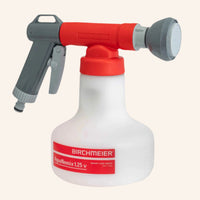





Want to get rid of ticks and fleas? Here’s how to do it without using pesticides.
The most effective way to control ticks and fleas is to tackle them at the source, where they develop. Using nematodes means you’re harnessing nature’s power, which is safe for your garden, your pet and yourself.


Recognizing Fleas
You can’t tell if there’s an infection just by seeing little dots. Also look for scratching, biting, restless sleep, bald spots, and black crumbs in the fur. These crumbs can be flea feces, which often indicate active biting. In the house, you'll mainly find signs where the animal rests: basket, couch, rug, baseboards, and cracks. If you want to start flea control quickly, begin with a flea comb and a white surface for inspection.
If you get red, itchy spots yourself, treating fleas in humans is almost never the real endpoint. The source is usually an animal or an environmental hotspot, so you only win if you tackle both simultaneously.
Step-by-step plan: tackling the animal and the environment
Flea control is most effective if you don't improvise but follow a sequence.
- Start with the animal and the home on the same day, so everything is on one timeline.
- Comb daily, especially around the neck, tail base, and belly, and note what you find.
- Wash textiles where the animal lies at a temperature the material can withstand, and dry thoroughly.
- Vacuum thoroughly, every day in the initial phase, with extra attention to edges, cracks, and areas under furniture.
- Empty the vacuum cleaner immediately after use to avoid re-infestation.
The pitfall here is "symptom management only." If you primarily view flea control as treating the animal, you'll constantly be playing catch-up because you're leaving the breeding ground untouched.

Flea control for dogs
With dogs, the approach works best if you simultaneously consider bite pressure and environment. You don't just want to stop the scratching, you want to break the cycle.
- Check the coat with a comb and look for spots around the tail base and groin.
- Address your dog's sleeping areas first, as this is where most shedding occurs.
- Maintain a consistent cleaning schedule, especially in the first few weeks.
Later in your plan, there comes a point where flea control in dogs is primarily about perseverance. If you still see bites, it often doesn't mean that everything "is back again," but that you are still in the emergence phase.
If you want to tackle the environment more specifically, beneficial nematodes against ticks and fleas in the garden can be a logical addition to your cleaning routine, especially in places where your dog often lies or plays.
An extra reality check: with a flea allergy, a few bites are enough to cause a lot of itching. This makes flea control in dogs more sensitive to timing than you might think.
Flea control in cats
Flea control in cats requires extra caution, as cats can be more sensitive to treatments and because they groom themselves extensively. Therefore, focus on control, environment, and a consistent routine.
- Comb regularly, especially if your cat spends a lot of time outdoors.
- Clean favorite resting spots, including windowsills and cushions.
- Keep the approach calm and consistent, and combine with environmental measures.
What often goes wrong is that people change their plan every few days. This just makes things harder for yourself, because treating cats for fleas is all about sticking with it until the very last pupa has hatched.
If you notice that you want to stop too soon, use a simple measuring stick: comb daily and make notes. This way, flea control becomes a process with evidence, instead of just feeling.

Steinernema Carpocapsae Nematodes against Ticks & Fleas
 Order now, get it tomorrow
Getting rid of fleas in your house
Flea control in your house is the part you'd rather skip, and that's precisely why it's often the bottleneck. Focus on hotspots: basket, sofa, carpet, baseboards, crevices, under beds, and places with little sunlight.
- Vacuum daily in the initial phase, and go slowly to pick up eggs and larvae as well.
- Steam cleaning can be effective for carpets and upholstered furniture, provided the material can withstand it.
- Wash and change covers, blankets, and pillows regularly.
If your garden or shaded areas around the house play a role, you can use natural nematodes against ticks and fleas for outdoor use as part of your overall plan.
Many people underestimate how quickly the house seems "clear" again, while the cycle is still ongoing. Flea control here means continuing until you find no more signs for several weeks.
Fleas on humans: what to do and what not to do
Controlling fleas on humans starts with reducing exposure and addressing the source. So, you don't treat "yourself as the target," but the situation.
- Avoid sitting or sleeping in places where the animal rests until you have the infestation under control.
- Wash bedding and clothing that came into contact with hotspots.
- If you are getting many bites, check if there is a pet, a visiting guest with a pet, or a rodent source.
The hard truth: you can reduce itching, but as long as you don't also persistently control fleas in the environment, you will continue to get bites.


Repeat treatment and timing
Flea control is a process, not a switch. Because pupae can remain dormant and only hatch when exposed to warmth, vibrations, or carbon dioxide, you need a recurring rhythm that lasts longer than your initial dip in motivation.
Choose a rhythm you can maintain, such as weekly washing and intensive vacuuming in the first few weeks, and then scale back once you find nothing for several consecutive weeks. Those who check off flea control too early often experience a "second wave" that was actually the first, just later.
Prevention: Limiting Recurrence
Prevention isn't glamorous, but it works. Flea control at home starts with reducing places where eggs and larvae can hide.
- Keep bedding washable and make it part of your regular routine.
- Vacuum more frequently in areas where your pet spends a lot of time, especially carpets.
- Limit clutter under sofas and beds so you can access everywhere.
If you regularly have problems, honestly evaluate your system: how does the animal come in, where does it shed, and what do you consistently do or not do. Thinking in systems often makes the difference between "always a hassle" and flea control that truly ends.
Recognizing ticks & fleas


Decision-making guide: where should you start in your situation?
Flea control becomes easier if you choose based on the main source.
- You see fleas on the animal: start by combing and immediately treat resting places and textiles.
- You mainly see signs in the house: start with the hotspots and increase cleaning frequency.
- You get bites but see nothing: check visiting cats, dogs, and hidden places such as cracks, baseboards, and carpet edges.
- You mainly experience nuisance outside: look at shady spots and places where animals rest.
The goal is simple: flea control is fastest if you first reduce the largest source, and only then refine your approach.
Home remedies and misconceptions
Flea control "oma weet raad” is a popular search query, but many tips mainly address the feeling of control, not the cycle. Washing, vacuuming, and mechanical cleaning ARE useful, because you remove stages from the environment.
“Flea control vinegar” is often mentioned, but vinegar doesn't automatically kill all stages and usually doesn't solve the core problem. At most, see it as a cleaning aid, not as a plan in itself. If you use it, always combine it with your basic approach, otherwise flea control will remain an endless loop.
Frequently asked questions about ticks and fleas
Ticks are arachnids that attach themselves to the skin of humans and animals to drink blood. Fleas are insects that jump and feed on the blood of pets. Both are annoying, but ticks are more dangerous as they can transmit diseases such as Lyme disease.
Ticks live in tall grass, bushes, and forest edges and wait for a host to pass by. Fleas often enter homes on pets and lay their eggs in carpets, furniture, and flooring. Both thrive in damp, warm environments.
Ticks are active from March to November, with peaks in spring and autumn. Fleas are active indoors all year round, but outdoors they are mainly active in summer and autumn.
Yes. Ticks can transmit Lyme disease and other infections through their bite. Always remove a tick as quickly as possible with tick tweezers and pull it straight out of the skin. Fleas are less dangerous to humans but can cause itching, skin irritation and allergic reactions in pets.
No. As long as hosts are present, ticks and fleas will continue to reproduce. Fleas can multiply rapidly indoors. A single flea bite carries eggs that will spread throughout your home.
Keep the grass short and remove dead plant material and piles of leaves where ticks like to live. Treat your pet regularly for fleas and ticks. And preventively treat the soil in your garden, so that larvae and pupae do not get a chance to develop.
